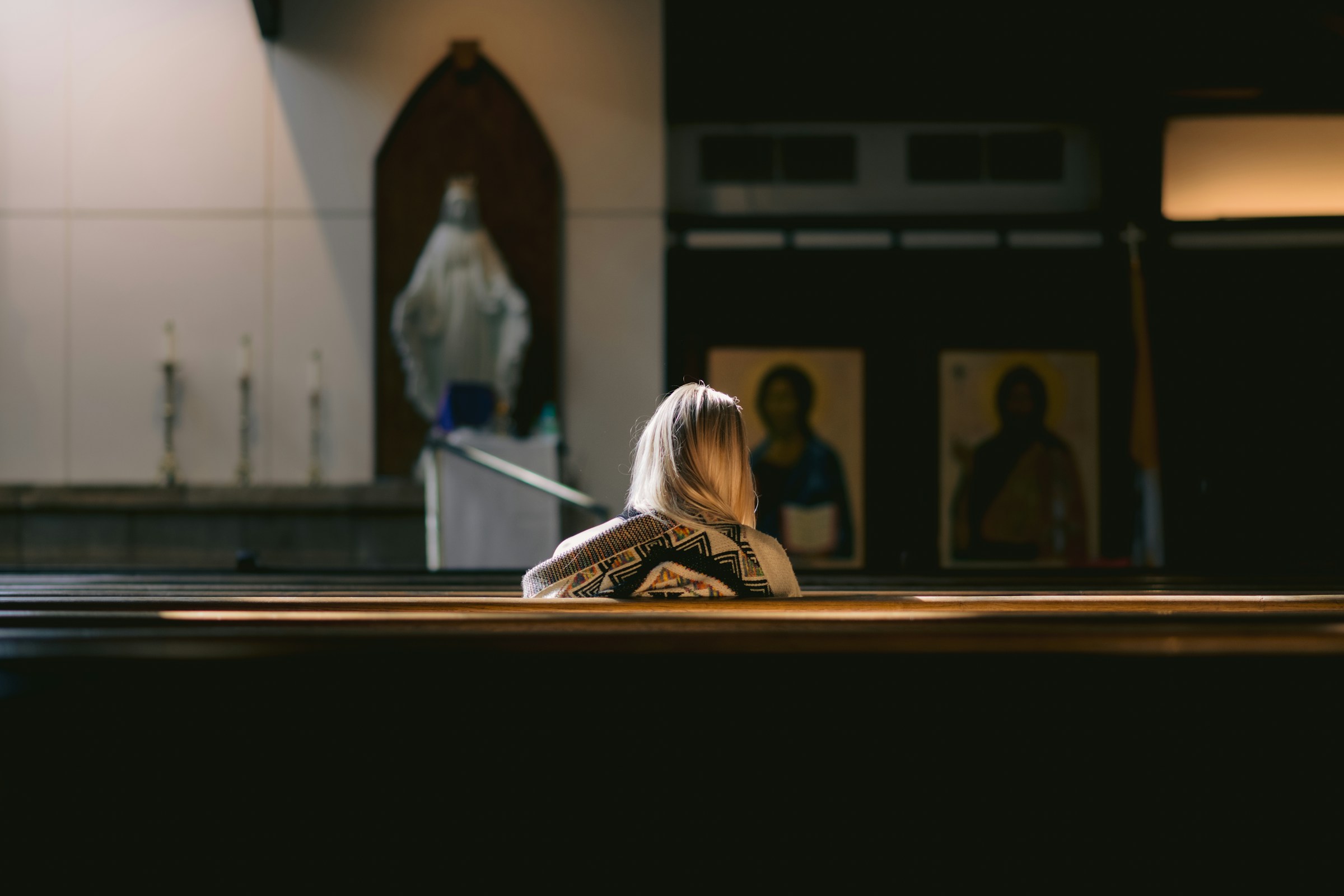
Imagine sitting in mass surrounded by hundreds of people that you love. It is hard to convey the deep sense of communion that I have felt in these moments at the high school where I have taught for the last six years.
For tens of millions of Americans, such experiences are quite rare or even nonexistent. As old forms of community have crumbled, we have failed to replace them with anything that approaches satisfying our deep desire for genuine community and communion.
The results have been catastrophic for our society. Isolation, loneliness, anxiety, and sadness have skyrocketed. Many people have lost a sense of meaning and purpose. Extreme individualism, fixated on absolute choice and autonomy as the key to happiness, has produced widespread misery instead.
The collapse of civil society, where intermediary institutions once acted as a training ground for democracy, has contributed to the rise of extreme ideologies, the evisceration of democratic norms, toxic polarization, and the fragile state of our democratic institutions. Isolated individuals who are obsessed with their self-interest do not make good citizens.
My time as a teacher in a Catholic school offered a stark contrast to this failed experiment in hyperindividualism.
It has been my job to love every child in the building—to will their good, to help them flourish, to make sure they know they are seen and valued no matter what, and to take delight in their unique contributions to our community and this world. I have been there with them to celebrate when they are achieving one of their dreams—and I have also been present when they have suffered heartbreaking defeats and disappointments, failed to live up to their own expectations or values, and experienced other difficult moments that teenagers inevitably face.
We have hung out as they tried to escape boredom. We have played sports and engaged in other forms of free play together. We have performed community service together. I have seen their creative expression through their art, dance, and more. I have heard about their hopes, dreams, fears, insecurities, and everything else in their lives—on retreats, at lunch, in free periods.
I am not autonomous from them. Even though they will inevitably graduate and start the next chapter of their life, all of these interactions have shaped me and my life, just as it has shaped them.
And in my years as a teacher, I have felt such fulfillment and joy—because I have experienced this profound connection. I have felt such meaning and purpose, because of this profound responsibility.
I likewise have a deep bond with the teachers and staff members that shared my commitment to the school’s mission and the true flourishing of the students.
As we try to address the crisis of loneliness and isolation in the country, which may very well accelerate with new technological developments, it is helpful to think about thick communities like Catholic schools—and what we might learn if we wish to form stronger communal bonds.
It is not simply being around others that reduces loneliness. Most of us have probably been in a crowd and felt unseen. People can sit in the middle pew at a packed church and feel alone.
Likewise, basing one’s identity on membership in a mass political party, ideology, or movement and seeking community there certainly does not seem to satisfy many people’s desire for authentic community. Instead, it often seems to make people vulnerable to ideologies that destroy solidarity by fostering narrow conceptions of identity and fueling outrage, mistrust, and hatred.
Digital communities meanwhile cannot replace what thick face-to-face communities provide. Social media and smart phones are one of the causes of increased loneliness, rather than one of the solutions. And the desire for communion cannot be satiated by workism, the use of intoxicants, buying consumer goods, casual sexual encounters, or therapy. The enjoyment of art, including movies and television, may offer a reprieve, but can also anesthetize us, making us less likely to actually deepen our relationships and build community.
What makes thick communities so different? There is sacrifice, trust, and mutual dependence. There are traditions, shared values, and norms. There is an orientation toward something outside of oneself. There is consistent care and concern. There is time spent in the authentic presence of the other.
Catholic schools are far from perfect, especially those that are diluting or abandoning their mission. And it is important to note that there are costs or downsides to thick communities, where there can be excessive pressure to conform. Some may feel like outsiders, even if efforts are made to foster inclusion. Norms can be oppressive if they do not align with true virtue and justice. And if incompetent or pernicious leaders trample upon the trust, relationships, norms, and values of the community, it is a deeply painful experience—giving one a sense of betrayal that is perhaps not present in places where self-interest is seen as the baseline for everyone’s conduct.
Yet we need these communities—as people that are made for communion, a church that seeks renewal, and a country in disarray, unmoored from our highest ideals. And since we are not born into them, we must build them.
 Millennial