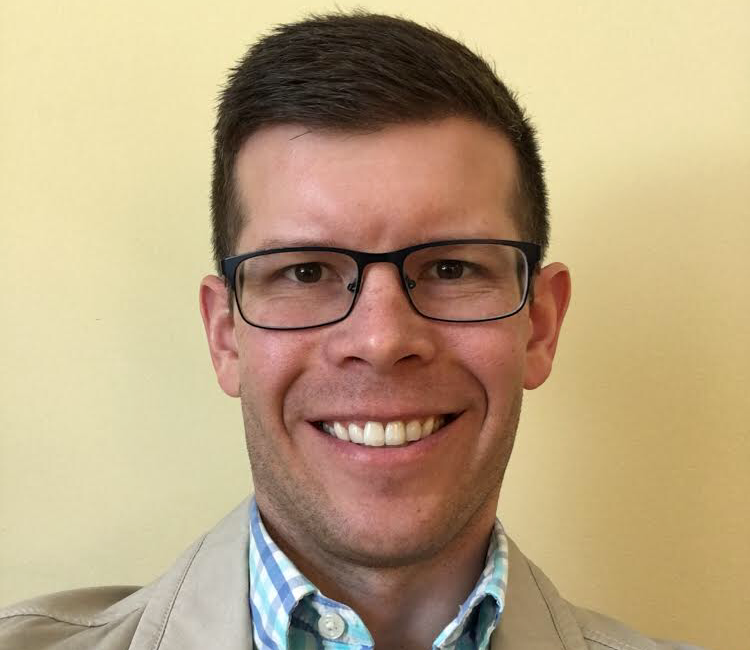
Patrick Manning is an assistant professor of pastoral theology at Immaculate Conception Seminary School of Theology at Seton Hall University, the author of Converting the Imagination: Teaching to Recover Jesus’ Vision for Fullness of Life, and a writer here at Millennial. He was recently named the new Director of the Center for Catholic Studies at Seton Hall. As part of a new series of interviews with Millennial writers and guest writers, as we enter our second decade as a publication, editor Robert Christian asked him about his work, faith, and life.
I found your book Converting the Imagination to be truly outstanding. What inspired you to write the book? And what did you set out to accomplish with it?
Thank you so much. It was always my hope that the book would be of practical help to educators. I set out to write this book because I could see that my students were struggling in a number of respects – with their faith, with mental health, and in life, in general. And it was breaking my heart because I know that God wants a fuller kind of life for all of us and has offered us the means of living that life through Jesus and the life of the Church. I had developed this approach to teaching the faith that has been effective with my own students, and I wanted to share that with other teachers. Most people just need to catch a glimpse of something intriguing or life-giving to take an interest in Christianity. My approach is all about helping them to catch that glimpse. I don’t claim to have it all figured out, but I hoped to at least offer a vision and spur a conversation around ways of teaching that might be more helpful to our students. I also wanted to make the case that Christianity is up to the task of addressing the challenges of life in the modern world. In my experience it absolutely is. In some cases, we just need to work to recover the life-giving aspects of the tradition, and that’s what I was trying to do in this book.
If you could speak to all the prominent leaders in Catholic education in the country (pre-K through college) and offer some succinct advice, what would say?
In general, I am reluctant to give advice. I think it’s important to recognize that the educators typically know their contexts and their students best. However, I might pose this question to Catholic educators: What are the needs of your students, and what resources from the Catholic tradition might help to meet those needs? In my experience, teaching bears fruit when we begin at that nexus. For example, my recent work, including my upcoming book, has focused on contemplative practices. I have found that these practices which promote depth, healing, and peace are extremely helpful in meeting many people’s needs today. So many people are suffering on account of poor mental health, our culture of busyness, and all the noise of modern life, and practices like silent prayer, lectio divina, and gratitude can be profoundly healing.
For someone who has a profound understanding of the anxiety and alienation so many young people in the US seem to be experiencing, you do not seem ready to throw in the towel on Gen-Z. What gives you hope for this and future generations?
Not at all. The challenges are real, but I also see many reasons to be hopeful for younger generations. One reason is the spiritual hunger I see in young people today. They are less likely to take things for granted and that can be frustrating to the adults and religious leaders who would find it easier if they just accepted Church teaching like good boys and girls, but I see in that hunger the potential for a more authentic and mature faith. I think a change in the status quo is exactly what is needed when it comes to politics and our attitudes about the environment. I suspect that it will be these younger generations that bring about real change in these areas of contemporary life. I see lots of creativity in today’s young people. They are very enterprising and have gifts and perspectives that stand to greatly enrich our church and the world.
How does your faith shape your life beyond work?
With three little kids at home, my life beyond work is largely dedicated to my family, and I have really tried to embrace my vocation as a husband and father as my path to sanctification. Concretely that means accepting the dirty diapers, tantrums, and painstakingly slow pace at which things get done as the means God is employing to shape me into the person God wants me to be. Part of me would love to be living in a monastery somewhere, at least some of the time, but that is not where God has called me. My calling is to balance the active and the contemplative life. Safeguarding periods of prayer each day is essential to helping me live the rest of the day in a loving way.
Have any experiences in recent years changed how you view your faith or your life?
I have been very fortunate in life. I’ve always done well in school and in my career. But the most important growth I have experienced has come when I have run up against my limits. That has happened to me often as a parent. It’s not always clear to me what is the best thing to do for my children, and having a house full of little kids makes it impossible for me to have the kind of clean and controlled environment I want to live in. But my kids are the best thing to ever happen to me, and most of the other best things are things that I did not plan. For example, when I first completed my doctoral studies and went on the job market, a couple of positions that seemed like a sure thing fell through, but then I ended up in this position at Seton Hall University that has been a tremendous gift. These experiences have humbled me and helped me to realize that God knows better than I do what is good for me. I have learned to gratefully accept whatever God is offering me even if it doesn’t fit the plans in my head. There’s something a little scary about living this way but also more exciting and ultimately more fulfilling.
Why are you Catholic in 2023?
I would just quote St. Peter when he said, “Lord, to whom should we go? You have the words of everlasting life.” It’s not always easy to be Catholic. It can be frustrating and downright infuriating. But it still feeds me. Specifically, I find so much wisdom in this tradition, in the writings of Catholic thinkers and saints and in the spiritual practices that have been handed down to us. Maybe more than anything, I am convinced that the Holy Spirit is still at work in the Catholic Church because of the modern saints I have encountered – people who give of themselves so selflessly and lovingly, who bring healing to others, who effuse in otherworldly peacefulness. I want to live like these people, and I see that they are able to live this way because they seek God along this path and within this community.
 Millennial