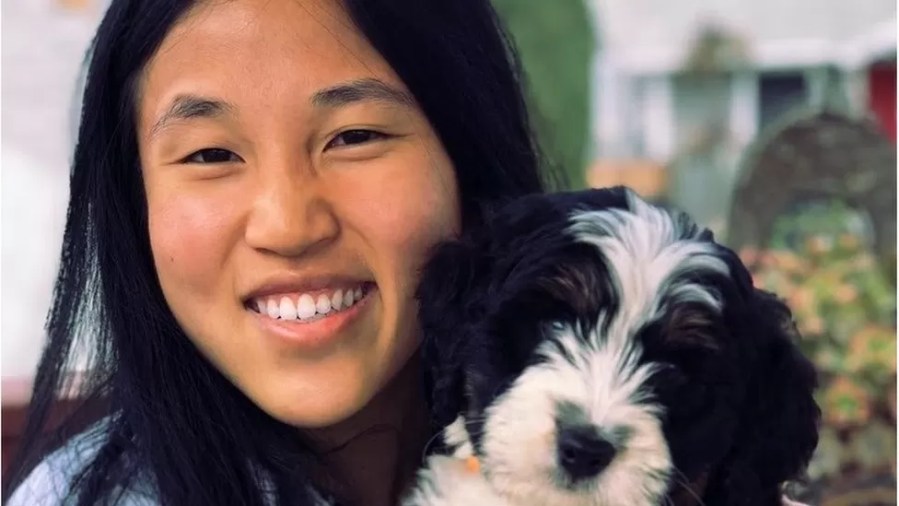
Jess Meeth is the National Communications Director for Democrats for Life of America (DFLA). Millennial editor Robert Christian interviewed her about her faith, work, and perspectives on the whole life movement.
How did you become involved in whole life advocacy?
Before I joined the team at DFLA, I worked as a counselor with a nonprofit that provides financial assistance to abortion-minded women. The Guttmacher Institute reports that 73% of women seek abortion due to financial insecurity. I directly worked with these women during and after pregnancy to provide emotional and financial support. This nonprofit would crowd-fund to help with rent, utilities, transportation, groceries, and childcare. Through this experience, I witnessed firsthand that women often need support on a larger, legislative level when it comes to carrying, birthing, and raising children. It is women and parents in underserved and underprivileged communities who are hushed when it comes to legislation around abortion. Many of them lack affordable and accessible healthcare, housing, and daycare. They also typically do not earn a livable wage. Poverty should never be a barrier to pregnancy and parenting. DFLA actively proposes and lobbies for legislation that will bridge these gaps.
How does your faith shape how you approach politics? And, given the rates of disaffiliation, do you think the whole life movement can and should draw support from young people who have no religious affiliation? If so, how can that coalition be built and kept together?
I attended Catholic high school and made the decision to enter the Church. It was during my time at Catholic high school that I was introduced to dignity of every human life from conception to natural death. My faith is a part of my whole life conviction when it comes to social justice and fighting for preborn children, but I do not solely oppose abortion because of the Catholic teaching. And prior to misconceptions, there are many people who oppose abortion who are not religious or faith-based. DFLA is a secular organization which has members from all different backgrounds and beliefs. But we all come together in our shared mission to legally protect preborn children and provide pregnancy and parenting support. We oppose abortion because it is a biological fact that human life begins at fertilization. And we oppose abortion because it is an act of violence against a human life. There needs to be a diverse and inclusive space for all whole life people across the political and religious (or non-religious) spectrums.
What do you think are the major whole life challenges the country currently faces?
As whole life advocates and activists, we firmly believe that we will see a transformation in how we protect and respect all human life when we respect and protect it from the moment it begins in the womb. There will be less violence inside and outside of the womb when we value the humanity in the preborn and in each other. Many social justice issues are tied together. To be whole life means to defend all human life from conception to natural death. This includes opposing capital punishment, assisted suicide, and euthanasia.
How do you think the Dobbs decision has affected the politics of abortion?
Since the Dobbs decision overturned Roe v. Wade, we have seen both red and blue states enacting legislation around abortion without having a solid infrastructure to support women and parents. Women and parents needed support before and during Roe v. Wade, and they need it now. They should never feel like they cannot carry, birth, or raise children due to financial insecurity no matter what state they reside in. Our work was never done, and it’s far from over. The politics and general discussion around abortion has also become more contentious and divisive. We have politicians from both parties weaponizing the issue to score political points. And with all the noise around the legality of abortion, the voices of those who are underserved and underprivileged are being hushed. Our country has lost focus on giving women and parents an equal opportunity to carry, birth, and raise their children. We need to shift the conversation around abortion to removing barriers around pregnancy and parenting, particularly poverty.
One thing I hear from many supporters of legal abortion is that new post-Dobbs restrictions threaten women’s lives, including those experiencing miscarriages. How do you respond to arguments that restrictions like this threaten women’s lives?
There are many valid concerns around what abortion limitations mean for women facing miscarriages, ectopic pregnancies, and other high-risk health matters. We should all listen to understand where they are coming from in a sensitive and empathetic matter. There has been a lot of fear-mongering from both sides, resulting in the spread of misinformation. A doctor has a duty to provide care and treatment to patients, including miscarriages and ectopic pregnancies. It is important to have a larger discussion between medical professionals and lawmakers to address any misunderstandings and clarify how laws will be implemented. It is also important to note that all legislation including abortion limitations include “life of the mother” exceptions.
 Millennial