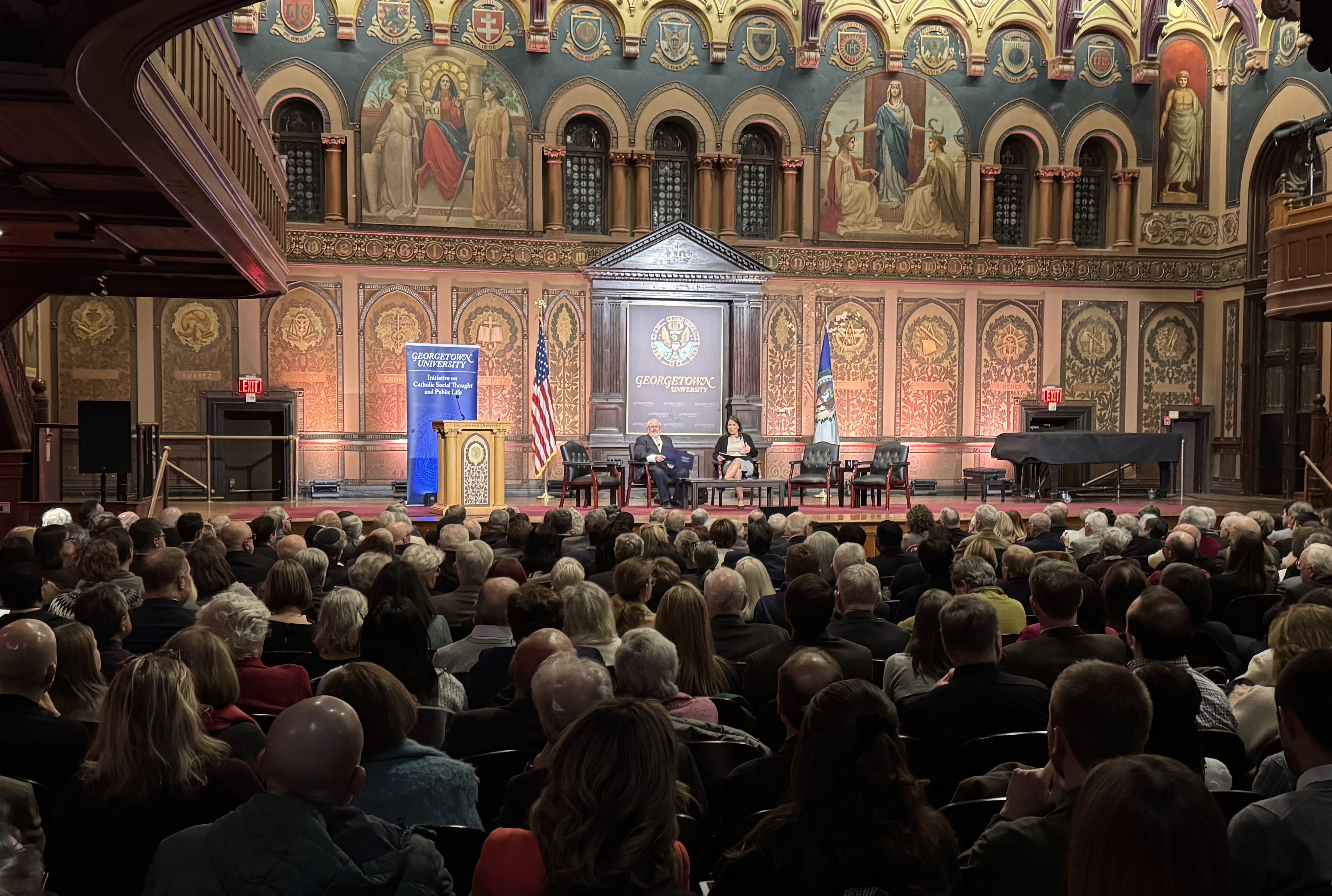
At America, John Carr offers lessons from 50 years at the intersection of Catholic social teaching and public life, including these:
- Over these 50 years, I have learned that this work should begin with our faith, not our politics; with the person of Jesus Christ, not political leaders; with the Eucharist, not rallies; and with principles of Catholic social teaching, not the details of public policy or ideological agendas.
- Our faith puts things together that our society and culture pull apart. Human life and dignity. Human rights and responsibilities. Family and community. Solidarity and subsidiarity. Care for the planet and the poorest people on earth.
- I have learned that good leadership is critical, but bad or failed leadership can be more consequential. Consider how reckless leadership in the White House is damaging our democratic institutions and threatening the common good of our nation. Consider the moral, spiritual and institutional costs of Catholic leaders who failed to confront sexual abuse by members of the clergy.
- Limitations of leaders come not just from poor judgment or ideological blinders but also from isolation. Too many leaders live in a bubble, spending most of their time with people who share their views, admire their leadership, and want to preserve their own influence and access. They have assistants and colleagues unwilling or afraid to speak candidly, challenge assumptions or ask hard questions. Every leader needs someone who will say, “You have many good ideas, but this is not one of them.”
- The church and its leaders cannot abandon principles on life and dignity; but to advance our principles, they can and should work with those who may not share all our convictions. The church should help build bridges across partisan and ideological differences to advance the common good.
- Calling people names is not a way to persuade, but silence is sometimes acquiescence in what is wrong. A test of faith and institutional integrity is whether we can challenge those in power and even our allies when they violate Catholic principles.
- Religious leaders cannot become props in photo ops or window dressing for leaders who don’t take our principles, experience or advice seriously.
- There is a thirst for civil, principled dialogue as an alternative to the angry polarization and tribal politics of the broken status quo.
 Millennial