All of creation is the result of God’s love. This includes, of course, the sending of His Son. This includes, of course, you.
Franciscan theologian John Duns Scotus “defined God as infinite love,” and taught that the incarnation was not required as a payment for sin, but was actually planned from the beginning as an expression of God’s love.
From this, Richard Rohr, OFM Cap, suggests, “The absolute freedom of God allows God to create, or not to create, each creature. Its existence means God has positively chosen to create that creature, precisely as it is.”
Scotus described an irreplaceable “haecceity”, or “this-ness”, to each part of creation – including each person. As a result of God loving each person into existence, we are called to love every person as our neighbor.
The Franciscan tradition overflows with this love. In Admonition 1, Francis writes that each day the Lord, “humbles Himself as when He came from the royal throne into the womb of the Virgin.”
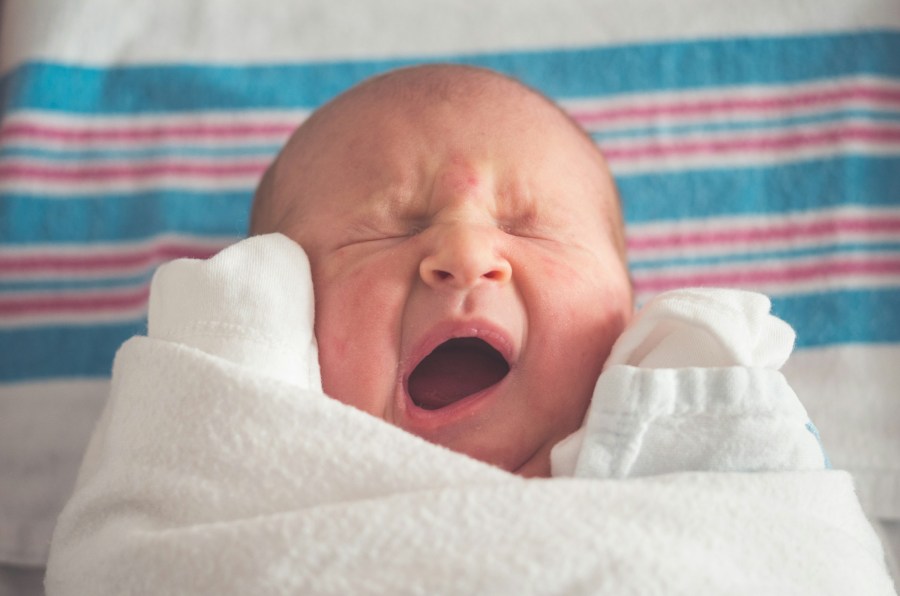
God sought such intimate love with human beings that he joined us in our humanity. He did not suddenly appear as a warrior on a battlefield or as a king on a throne. He started his life as the exact same size that we did: microscopically small, unrecognizable, vulnerable, and infinitely treasured by the Father.
Indeed, in Admonition 5, Saint Francis talks about our belovedness: “Consider, O human being, in what great excellence the Lord God has placed you, for He created and formed you to the image of His beloved Son according to the body.”
We are each wonderfully made in God’s image and we are valuable because we are so. We do not have to earn our dignity. We do not have to produce our value. Each of us, no matter our station in life or our ability, has it.
Francis loved the overlooked beings:
The worm in the road that he carried to safety;
the bird to whom he provided food;
the baby whom he saved from certain death in the river;
The lepers — truly the “least of these” in his time – whom he once found “bitter” but eventually called “brother.”
Madeline Pecora Nugent, our second guest on the Our Little Portion podcast, provided the beautiful reasoning behind Francis’s love of nature: It was Eucharistic. God so loved the world that he chose to come into it in the humblest way possible, and chooses to come into the world day after day in the Eucharist – an even humbler form than that of a baby.
“This is the ultimate power of God, the ultimate humility of God – the ultimate love of God. And Francis saw that,” Nugent tells us.
Everyone and everything is beautiful — and fragile.
I have witnessed this fragility and beauty of the world around me. I think of my wife’s beautiful voice when we went to Sunday Mass together for the first time; the deep love I felt toward a friend who traveled a long way to be with me when I needed him.
I think, of course, of my own son at our first ultrasound appointment with him: hearing the fast-paced, “boom, boom, boom” of his heartbeat on speakers and watching his tiny body move around on the screen. I think of the joy of that moment – a joy that was subdued as a result of knowing how it feels when a pregnancy doesn’t make it that far.
I think of the way that same little baby – now a little boy – picks up a worm from the sidewalk and places it in a flower pot or the dirt so that it will be safe (calling himself “like Saint Fwancis” as he does it).
I think of the gritty little terrapin at the Glen Echo Aquarium named “Nubbins,” due to its missing the end of one leg.
I think of friends and family who have cared for loved ones through illness, differing abilities, and recoveries.
I think of the feeling of my grandmother’s hand in mine as we sat in a Boston hospital room as she fought cancer; joking around with my Nana while she was barely conscious in hospice (but we could still sense each other’s sarcasm, and chuckle together).
These are beautiful moments. They are sacramental moments, aren’t they?
These are the moments where we notice our this-ness. The this-ness of each of us cannot be taken away. While Scotus refers to what makes us each distinct, we also remember that we are members of a universal family in which we all share a common trait: Human dignity. As John Paul II wrote in The Gospel of Life, “Man has been given a sublime dignity, based on the intimate bond which unites him to his Creator: in man there shines forth a reflection of God himself.” He says that dignity entails “values which no individual, no majority, and no State can ever create, modify or destroy, but must only acknowledge, respect and promote.”
Yes, we each have dignity and worth. We can’t be too small for it. We can’t be too fat for it — or too skinny for it. We can’t be too sad for it. We can’t hate ourselves enough to remove it. We can’t earn it.
No one can hurt us so much that it’s gone – even if it might feel that way.
We don’t lose it when we are inconvenient. Or when we cross a border. Or when we need government assistance. We can’t be too poor for it. God might even love us a little more when we’re at our most vulnerable.
He’s been there.
He’s shown us his scars.
He’s proven that we are infinitely loved. We are each beautiful. We are each necessary. We are each worth celebrating. You, too, reading this.
How would our world change if we could see this truth in ourselves and each other? In Tattoos on the Heart, Fr. Greg Boyle, writes,
“Only kinship. Inching ourselves closer to creating a community of kinship such that God might recognize it. Soon we imagine, with God, this circle of compassion. Then we imagine no one standing outside of that circle, moving ourselves closer to the margins so that the margins themselves will be erased. We stand there with those whose dignity has been denied. We locate ourselves with the poor and the powerless and the voiceless. At the edges, we join the easily despised and the readily left out. We stand with the demonized so that the demonizing will stop. We situate ourselves right next to the disposable so that the day will come when we stop throwing people away.”
Each of us matters. Each of us has dignity. If we live according to this truth, we will transform the world.
You can subscribe to Our Little Portion here.

