via the Vatican:
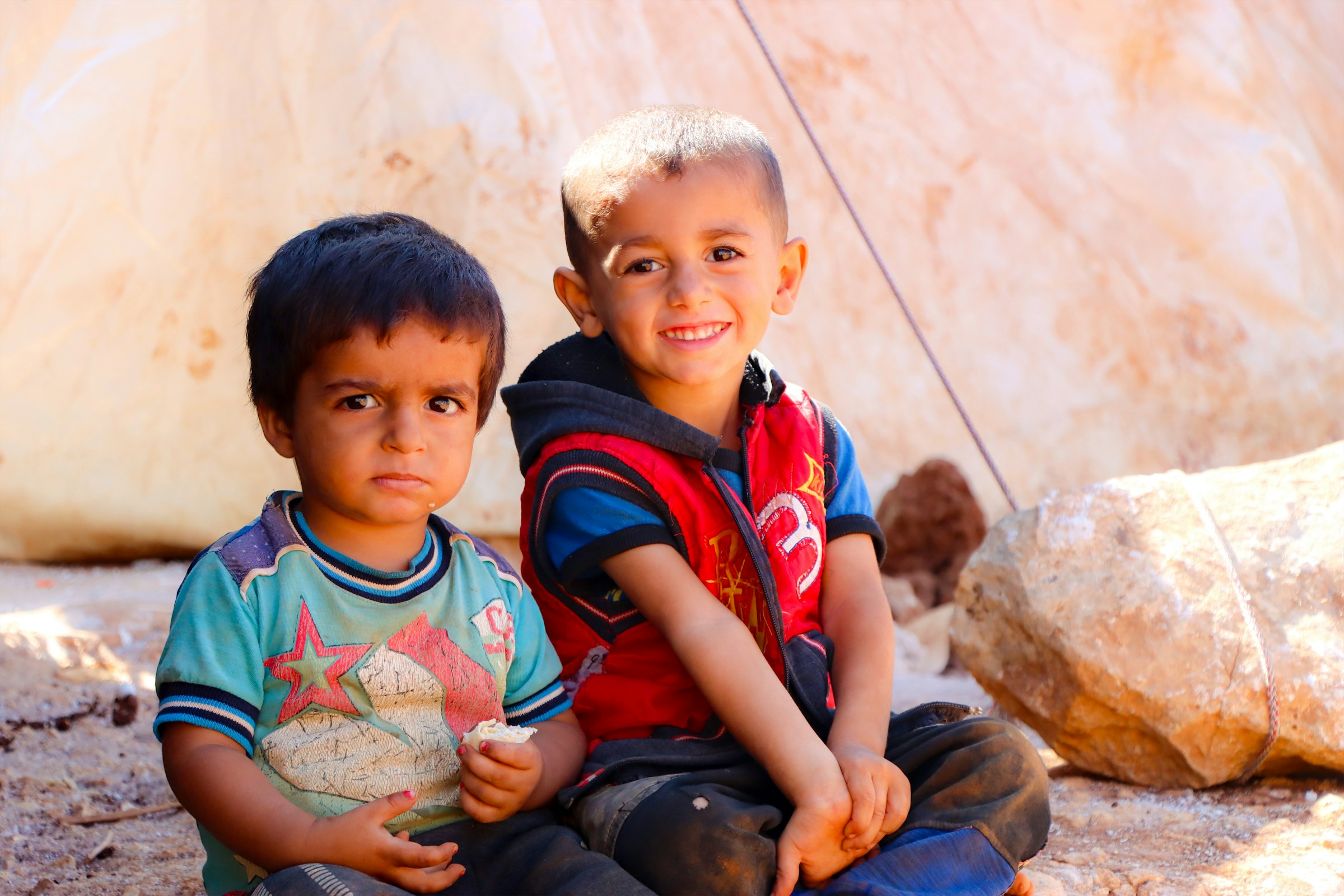
Every year, millions of children and adolescents are forced to leave their homeland because of war, poverty, violence, environmental disasters and other tragedies. Sadly, their number continues to grow. The economic, political and military consequences of this disaster are immense. The suffering of migrant children does not end with their relocation. There are very young children who have lost parents, brothers, sisters and friends, and who have witnessed unspeakable acts of violence. Others, separated from their families for long periods, try to reunite with them while enduring the anguish of separation. There are also minors who make the journey together with their parents, yet are exposed to extreme and traumatic conditions. Finally, we cannot forget the tragic situation of those separated from their parents because of repatriation.
To this already appalling situation are added further tragedies: deaths along migration routes, trafficking and exploitation, the recruitment of minors for use in armed conflicts, sexual violence, forced marriages, and the atrocities they have suffered or witnessed during their travels. Their dignity is trampled upon in countless ways….
Yet, amid so much darkness, the light of solidarity is not lacking. Individuals, families, civil institutions and ecclesial communities choose not to pass by on the other side (cf. Lk 10:29-37). We think of the families who open the doors of their homes in order to restore to these children the warmth of a family hearth; the educators who serve in reception centers; the volunteers and aid workers who each day devote themselves to healing the invisible wounds of these little ones along migration routes and in our cities. They bear witness through their commitment that love can overcome indifference….
Every child, every human being, possesses an infinite dignity. Each is created in the image and likeness of God (cf. Gen 1:26); each is a presence of the Lord. Before every migrant child, we are called to make an act of humanity and faith, for we are able to welcome and encounter the Lord. This call becomes even more pressing in the light of another of the Lord’s affirmations in the Gospel of Matthew: “I was a stranger and you welcomed me” (Mt 25:35)….
It is necessary, then, to intervene in their countries of origin in order to remove the causes that compel them to flee, while at the same time offering protection and welcome in the countries of transit and destination….
Before the concrete faces that confront us in daily life, the entire Christian community is called to regard these children as its own sons and daughters, and to engage with the concrete story of each one of them. Christian communities should be encouraged to promote the integration of refugees and migrants and to value them as full members of the ecclesial family, fostering new educational and spiritual paths, including personalized ones, which go beyond the mentality of mere assistance. In particular, it is essential to prevent the solitude, isolation and rejection that not infrequently also affect the children of migrants; and to promote opportunities for encounter and integration in which local young people and young migrants can support each other along a path of mutual respect, solidarity and friendship….
Public and private institutions are bound to prioritise the protection and dignity of every single child and adolescent. This requires the adoption of effective legal instruments of protection, the promotion of family reunification, and the prevention of the trauma caused by separation. An urgent change of perspective is needed: the focus of the debate must shift from the mere management of migration to the full and immediate protection of human rights, adopting “a coordinated, supportive and effective response, capable of guaranteeing protection, welcome and genuine opportunities for integration to those who migrate” (Address to the Spanish Parliament, Madrid, 8 June 2026).

