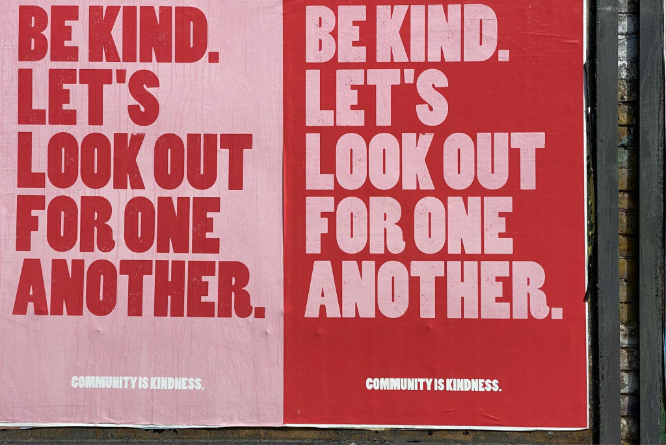
Millennial editor Robert Christian writes:
In his Letter from a Birmingham Jail, Dr. Martin Luther King Jr. wrote, “We know through painful experience that freedom is never voluntarily given by the oppressor; it must be demanded by the oppressed.” The struggle for freedom and justice requires courage, persistence, resilience, and faith.
One of the greatest obstacles to building a more just society is complacency—a willingness to acquiesce to an unjust status quo by pursuing only our private good or anesthetizing ourselves with consumerism, intoxicants, or other ephemeral distractions.
But for those with a serious commitment to justice, there are other temptations that can lead us astray. In the first reading for the Sixteenth Sunday in Ordinary Time (Wisdom 12:13, 16-19), we are told that “those who are just must be kind.” When we struggle for justice, we are always at risk of mirroring the worst behavior of those who are working to undermine the common good. And we are perhaps even more susceptible to pride–the hubristic conviction that our actions must be right because our cause is just. This command to be kind is therefore a critical reminder that justice must be rooted in love.
Kindness is grounded in love–willing the good of another person. Our actions are kind when they reflect a sincere belief in the value and dignity of another person. When the struggle for social justice becomes abstract rather than rooted in its personalist foundation of seeking the flourishing of each and every person, it can easily embrace unjust means or veer from its pursuit of the common good.
When we remember that those who are just must be kind, we are reminded that justice and mercy are not at odds. The God of Love is the architect of the Kingdom of God, our vision of justice fully realized. We therefore must avoid the temptation to cast off those who undermine the struggle for justice, seeing them as irredeemable and unworthy of mercy. The communion we seek is not with a select band of perfect, sinless like-minded folks, but with all who are made in the image of God. The door to redemption must not be slammed shut. The merciless are never just.
An essential virtue in building a just society that is rooted in love is humility. At a time of deep injustice, this can be very difficult for those who are working diligently to overturn this throwaway culture. When we see the poor and marginalized suffering because so many with wealth and power are motivated by greed and cupidity rather than a sense of duty, when our right to participate in our own government is undermined by personality cults and megalomania, when a culture of indifference leaves so many feeling alienated, isolated, and left behind, we feel righteous anger. And we should.
But we cannot let this morph into the belief that we alone have all the answers and that anyone who disagrees with our goals is simply a villain. This fosters a totalitarian mentality that is fundamentally at odds with our ultimate goal of communion and the essential means of pursuing it in a fractured, polarized democracy that desperately needs good citizens.
Instead, we can counter toxic polarization through loving witness. We can show respect to those who have different backgrounds and values, even as we oppose the harmful policies they may support. We can remain committed to dialogue and persuasion, searching beyond simplistic slogans for shared values. We can be firm in our commitment to the poor and vulnerable, while being open to new insights and evidence. We can work to expand coalitions through inclusion rather than shrinking them in pursuit of ideological purity. We can be courageous while being kind.

